Jackie Chan Biography - Famous Actor

Jackie Chan Biography - Famous Actor

Jackie Chan sang his birth name Chan Kong, he is an actor and martial artist, he was born on April 7, 1954 in Victoria Peak, Hong Kong, his father's name is Charles and his mother's name is Lily Chan, her parents are refugees from the Chinese Civil War. 1960 Chan's father worked as the French ambassador in Hong Kong in 1962, he was sent to the Chinese Opera Research Institute in Hong Kong to train in musical dance and traditional martial arts.

At the age of 8, Chan co-starred with his co-stars in Big and Little Hugs Inwar, which led to romantic comedy the following year, followed by small appearances in films like Come and In 1973, at the age of 19, he made brief appearances as a stuntman in Bruce Lee's films Fist of Fury and Enter the Dragon. All In is a 1976 family comedy following Little Tiger of Canton. He started working as a construction worker with his family in Australia. He was nicknamed Jacky in Australia because a fellow construction worker called him Jack.

He took him under his watch in 1976, and Chan received an offer from a Hong Kong filmmaker named Willy Chan to work as a stuntman in his film, the new Fist of Fury, and in 1978 cast Chann in the lead role. He made his film debut in 1978 with Snake in the Eagle's Shadow, and in 1980 he directed his first film, The Young Master, and was heralded as the most popular martial arts superstar across Asia.

In 1982 he directed and starred in another venture, Dragon Lord, in 1982 he married Taiwanese actress Lin Fang Cho, also known as Chan Jolin, and the same year they had a son, Jaycee Chan, who [musical] Chan played in 1983. The film was announced as the winner of the Best Action Design Award at the Third Annual Hong Kong Film Awards in 1985 on the day of the film's project, which incorporated the dangerous stunt-driven style of martial arts.

Lies Story is a Hollywood-influenced action comedy film that led to the formation of the Jackie Chan Stuntman Association in 1985, his biggest box-office hit in the film God, which he starred in and directed, which formed the production company Golden Way from 1988. In 1998, he started getting a huge number of offers from Hollywood, he was first offered the role of San Villain in the Bronx police story Rumble - Shield of God - Operation Condor Police Story Three Super Cops Drunken Master Police Story First Strike. Hollywood films but he turned down the role and won the Best Actor Award at the 1993 Golden Horse Film Festival, in the 1998 film Police Story 3 Super Cop for his role in the Hollywood film Rush Hour, which was a huge box office hit.

 Newland voiced Zhang's character in the film and sang its original soundtrack.In 2003, he teamed up with British comedian Lee Evans and Claire Forlani in the film The Medley. New police story The Myth and Robin B Hood's hugely successful Humana Chronicles saw his releases as Blade. Awarded Best Actor at the 2005 Golden Rooster Awards, the 2007 Rush Hour trilogy grossed over US$258 million. In 2011 Chan starred opposite Roman Polanski in Dollars, The Karate Kid, a remake starring Chan and Will Smith's son Jaden Smith, which grossed over three hundred and fifty-eight million US dollars.

In 2011, his 100th film of his career, 1911, won the Dollars But Kicker award at Nickelodeon's Kids' Choice Awards. Jackie is not only an actor, but also a martial artist, film director, producer, singer, stunt director, actor, who started acting at the age of five, his father Charles was a spy for the Chinese Nationalist government, his mother Lily. A stage artist because she sold opium on the side.

He was a dynamic child, meaning Cannonball San failed his first year of primary school, Jackie was left in a boarding school and his parents moved to Australia in search of work, Jackie released 20 albums since 1984. Cantonese Mandarin Japanese Taiwanese and English No company has confirmed that Chan or his crew will pay him and his stunt team Jackie Guinness World Records for the most stunts by a living actor during the Armor of God era.

 In the 1980s he broke twelve concrete, Charlie Chaplin was such a big fan of Buster Keaton that he carried several guns and grenades to protect himself and other performers. And in the 1990s, Jackie Chan's son loved giving thumbs-ups. He will receive none of his $130 million fortune. He is a San Buddhist who speaks several languages ​​including Cantonese, Mandarin, English, German, Korean, Japanese, Spanish and Thai. Don't let circumstances control you. 


Jackie Chan's Lifestyle

Chan's father was named Charles Chan, born in 1914 and died in 2008 at the age of 93. According to Chan he was a personal guard. His mother names Lily Chan, born in 1916 and died in February 2002. Chan married Taiwanese actress Feng-Jiao Lin in 1982. Their son, singer and actor Jaycee Chan was born in the same year. Chan has an illegitimate daughter named Etta Eng Chok Lam born in 1999 as a result of his relationship with Miss Asia 1990 Elaine Wu.

 This became a scandal within the media and one of the biggest scandals of Chan's career. At the age of 17, Chan worked as a stuntman until 1976, when filmmaker Willie Chan offered him a role in his film Lo Wei and Chan then began to establish himself as a comedy kung fu actor. In the early 90s, Chan was still unknown to Hollywood, but that changed with 1995's Rumble in the Bronx and 1998's Rush Hour, which became blockbusters; Both were hugely successful and Chan gained a great reputation. With an unquestionable legacy, Jackie is easily immortalized in the eyes of his fans and we have his movies to thank for entertaining us so wonderfully.

He is the first Chinese actor in history to receive an honorary Oscar for five decades in the industry with more than 200 films under his belt. Of his enormous filmography, these 10 entertained fans the most by far 

1. He speaks 7 languages: Cantonese, Mandarin, English, German, Korean, Japanese and Thai and also American sign-language. 

2. In the act of performing his own stunts, he has broken his nose three times, his ankle once, most of the fingers in his hand, both cheekbones and his skull. 

3. There are only two things that scare Jackie Chan: needles and public speaking. 

4. Jackie Chan's son will not get any of his wealth. According to him, if his son is talented, he can get his own money, if not, he will waste Chan's money. Jackie Chan has an estimated net worth of $400 million. Apart from Jackie's houses in Beijing, he also owned real estate in California, Miami, Australia, Phuket Island and Hong Kong.

One of his homes is a $3 million French-inspired villa in Beverly Hills, California. The luxurious home has 6 bedrooms, 5 bathrooms, 3 fireplaces, a pool and many other amenities. Just like in the movies, Chan has great taste in his car collection in real life. Here are some notable cars from his huge collection. Jackie Chan and Mitsubishi have a special relationship. So much so, Mitsubishi even named a car after him and produced only 50 Jackie Chan special edition Evos, with a starting price of $77,000.

The Lamborghini Murcielago is one of the finest Lamborghinis ever built, and the most expensive car in the Jackie collection; It is valued at $354,000. The favorite car in Jackie Chan's collection is the Subaru Impreza WRX STI. It may not be the flashiest or fastest car on the block, but it's reliable and reasonably priced at $32,000. He is the proud owner of an Embraer Legacy 650. The plane costs 30 million dollars and is painted in beautiful and symbolic colors of red and yellow.

He is also the first Chinese to own an Embraer Legacy 500 aircraft. Rumor has it that the Legacy 500 is meant for short trips while the Legacy 650 is used for longer distances. Jackie has launched a 150-foot flagship superyacht with Chinese shipyard Jinlong. Built over two years at Jinlong's Huludao Yacht Industrial Park facilities, the superyacht features a monochromatic color scheme with an all-white hull and black trim.


Thank You.


Managing Director of 
 Blind Set 
 [Editor & presenter]
 Subair Mohammed Osmi

Isaac Newton: The Man and his Hidden Life

 
Isaac Newton: The Man and his Hidden Life

Sir Isaac Newton is widely regarded as one of the finest scientists of all time. His revolutionary concept of motion inspired every branch of physics, allowing other great minds to stand on his shoulders. Newton, however, was a man at odds with popular opinion—a secret alchemist and heretic who risked his life to write about the Anglican Church's shortcomings. This week's biography will introduce us to the real Isaac Newton. Isaac Newton was born at Woolsthorpe-by-Colsterworth, a tiny village in Lincolnshire, England, on January 4, 1643. His mother described him as a precocious youngster, so little that he would take up space within a quart cup.

The doctor who delivered him didn't believe he'd make it through the first week. Newton's father, Isaac Newton, died three months before the kid was born. He was a prosperous farmer, and Hannah was a wealthy widow. She reared Isaac alone for the next three years. Later, in 1646, she remarried as Mrs. Barnabas Smith. Isaac's relationship with his stepfather was strained, and the kid spent much of his time in the care of his grandmother. Benjamin, Mary, and Hannah were Hannah and Barnabas' three children.

Isaac seemed to have gotten along well with his brothers, despite his tumultuous connection with his mother. Isaac made a list of sins he intended to repent of when he was 19 years old. One of them threatened to set fire to his family, which included his mother and stepfather! Isaac attended a village school on occasion but did not begin regular learning until the age of 12, when he enrolled at King's School in Grantham, England. He was initially uninterested in his studies and fared poorly in all areas. However, he quickly changed his mind and chose to take his studies more seriously.

Isaac's stepfather died when he was 17 years old. His mother, sensing her eldest son's ability to be the family breadwinner, attempted to turn him become a farmer. But Isaac had no plans to become a farmer. In fact, he despised working in the fields. Fortunately, the head of the King's school intervenes on Isaac's behalf a few months later, telling him that Hannah is an excellent match for them. Isaac was bullied by another kid and chose an intellectual response over the bully and his friends.

Isaac received outstanding academic results. He was the top student in 1660, excelling in all disciplines. A Trinitarian Isaac began his studies at Trinity College, Cambridge University, in June 1661. She worked outside of class hours to pay for her education, serving meals and running errands for her teachers. The 18-year-old enrolled at Trinity College Dublin with the intention of becoming a Church of England pastor. However, he changed his mind around halfway through that first year. It is unclear why he did not pursue a career in the church, but it is obvious from his later writings that he formed opinions about God that opposed Anglican Church orthodoxy. Newton's education at Trinity College was founded on Aristotle's teaching. He was drawn to these concepts, but he complained because many of them were founded solely on the great philosopher's assumptions and beliefs. Newton was more interested in natural science and philosophy. It is unclear why he did not pursue a career in the church, but it is obvious from his later writings that he formed opinions about God that opposed Anglican Church orthodoxy. Newton's education at Trinity College was founded on Aristotle's teaching. He was drawn to these concepts, but he complained because many of them were founded solely on the great philosopher's assumptions and beliefs. Newton was more interested in natural science and philosophy.

In 1662, Newton wrote pages of a notebook with a list of 45 topics he wished to research. All of these fall under the umbrella of physics. But, unlike everyone else before him, Newton began to answer the questions. He began devising experiments to get the answers he sought. Newton, the physicist Newton's attention was diverted from his list of physics-related problems the next year. He was inspired by René Descartes' ideas, which led to a deeper study of mathematics. Descartes considered algebraic geometry the application of the Arabic study of algebra to geometry. In August 1665, Newton graduated from Trinity College.

He didn't earn the high ratings he deserved for his abilities, most likely because he focused too much on his private studies. During this period, the bubonic plague swept Europe as a whole. In London, one in every four individuals died. Colleges were shuttered to prevent the sickness from spreading. Newton's official schooling was hampered as a result, but he made the best of the situation. Isaac concentrated on his individual studies away from the family home for the following two years. Calculus, lunar motion, and optics were his primary fields of study.

He now had the opportunity to apply all of the information he had gained at Cambridge to the world around him. This prompted him to ask numerous more questions, three of the most fundamental of which were... Why do things constantly go wrong? Why didn't the moon fall to the ground? Why do planets maintain their orbits? Newton was certain that mathematics would lead him to the answers to these issues. He invented a new type of mathematics known as fluxions, which is the foundation of current calculus. He wrote subsequently of this moment in his life. . . At this time, I was in my prime of discovery and thinking in mathematics and philosophy. In the spring of 1667, Newton returned to Cambridge.

He grew up to be an odd 23-year-old. He was glad to spend hours alone with his thoughts because he had no pals. Many people rejected him as a lunatic. None of his contemporaries were aware that he was striving to grasp planetary motion. He was elected a fellow of the college and held other distinguished positions in the years that followed. Isaac published his first book, Analysis by Infinite Series, in 1669. It was a study of cubic equations and three-dimensional curves that garnered positive feedback from the scientific community.

Newton, as a Cambridge fellow, was expected to be ordained as a priest in the Anglican Church. However, his resistance to the dogma of the Trinity held him back. College administrators advocated for his nomination as Lucasian Professor of Mathematics. He postponed the requirement and was promoted as a result. Professorship in Newton Lucasianism Newton, at 27 years old, had one of the most prominent positions in mathematics. He was expected to teach on mathematics and deposit copies of his notes in the university library as a Lucasian Professor, which he rarely did.

He began speaking on optics, and his lecture notes became the foundation of his book Optics. Newton's studies in optics prompted him to concentrate on improving the functioning of the refracting telescope. He was having difficulty concentrating different hues of light in the lens. He was unable to overcome this issue, so he switched his focus to the reflecting telescope. Newton constructed the first operational reflecting telescope in 1668, based on the work of Scottish mathematician James Gregory.

He looked up into the night sky with his telescope and was able to see Jupiter's four moons. Newton was a Royal Society Fellow. Newton was elected a Fellow of the British Royal Society in 1671. To promote his proposed candidacy, he composed a letter on the nature of light, which was read aloud at the Society's next meeting. This prompted a mixed response, with some admiring his remark and others strongly opposing it. In 1672, Newton was elected to the Royal Society, signifying his admission into the professional scientific society. He had been working alone until that point. But suddenly he was in the company of the world's most distinguished scientists. Isaac instantly clashed with one of the Royal Society's most renowned members. The Society's Superintendent of Experiments was Robert Hooke.

 Hooke, in contrast to Newton, was loud and extroverted. He was an outspoken opponent of Newton's works on the nature of light, which questioned established thought. Hooke made 10 public objections to Newton's theories during a four-year period, each of which Isaac refuted. Newton despised the continual conflict that came with being a member of the Royal Society and departed after fifteen months. The secretary of the society, Henry Oldenburg, encouraged him to stay, telling him that he was well-liked. But Newton avoided society for the following two years. By 1675, Newton's unwillingness to take the priesthood had become a major source of contention with the Church. It became a topic of conversation and embarrassed the college. When it appeared that he could lose his job, he sought advice from his mentor and former Lucasian lecturer, Isaac Barrow.

Barrow wrote to King Charles II, requesting a special dispensation that would allow him to stay in office without entering the clergy. Newton was largely displeased with the development of the Anglican Church. Many of the trappings of the Catholic Church that he despised remained. His main issue, though, was with the dogma of the Trinity. He couldn't understand that God and Jesus were the same people. Newton traveled to London in March 1675 and requested a special dispensation. It was given without hesitation, much to his relief and amazement. The monarch did, in fact, eliminate the priestly requirement for all future Lucasian professorships. A dazzling comet emerged in the skies of England in November 1680. Leading scientists, including Newton and Edmund Halley, a new member of the Royal Society, witnessed and remarked on it. They gathered in 1684 to examine the geometry of the planets' orbits.

Newton's theories pleased Halley, who pushed him to report his findings in writing to the Royal Society. The Magnum Opus of Newton Newton spent the next 18 months writing his masterpiece, the Principia Mathematica. He was so involved in it that he frequently forgot to eat or sleep. In this three-volume opus, he has blended the results of twenty years of study, observation, and contemplation of nature.

He began by drawing up a series of definitions that served as the foundation for his thoughts about the natural world. These concepts of inertia, substance, mass, and momentum are still valid today. After building his foundation, he developed his three laws of motion: the law of inertia, the law of acceleration, and the rule of action and response. His most brilliant theory was the law of universal gravitation. The rule of gravity contradicted Aristotle's 2,000-year-old theory that the earth obeyed one set of principles while the sun, moon, planets, and stars obeyed another. There was a law that regulated the motion of everything in the cosmos, according to Newton. In 1686, the Principia was given to the Royal Society. Newton was instantly accused of plagiarism by Robert Hooke.

Regardless, the book was highly received. When it was released a year later, it became an immediate classic. The law of universal gravitation was widely acknowledged as the breakthrough that explained everything from planet motion to sea tides. Despite the public excitement to Newton's Principia, his theories would not be taught at universities for another fifty years. The Alchemist, Newton Newton initially became acquainted with alchemy when a student at Cambridge. This pseudo-science arose from Aristotle's teachings that all matter was made up of four basic elements: earth, air, fire, and water. It was thought that by altering the proportions of any of these components, one item might be transformed into another. Aristotle also taught that each of the elements was associated with a human feeling or trait. Newton was attracted by these notions, despite the fact that they contradicted the rational, evidence-based approach in which he synthesized his scientific beliefs. From then on, he lived a sort of double life, portraying himself as the ideal rational thinker while conducting unconventional alchemy experiments away from inquisitive eyes. Simultaneously, he formed a variety of religious beliefs that were clearly beyond the norm. Newton began amassing a substantial library of alchemy-related works in 1669.

He was fascinated with discovering universal truth and regarded alchemy as a tool to do this. He took thousands of notes on the issue and carried out hundreds of tests. His knowledge was subsequently distilled into a book titled Clavis. Theologian Newton Newton has a lifelong interest in religion. He wrote almost a million words on the subject over the course of his life, but relatively few of them were published during his lifetime. He grew concerned that current Christianity was not following Jesus' paradigm via his studies of the Hebrew language and meticulous study of the Bible. Newton was adamantly opposed to the notion of the Holy Trinity. This was an act of heresy at the time, punishable by jail or worse. Even though his work was unpublished, he was putting his life at danger by writing about it.

Observations on the Prophecies of Daniel and the Apocalypse of St. John, and The Chronology of Ancient Kingdoms Amended, were two key works of scriptural interpretation released a century after his death. Newton was enthralled by Solomon's Temple, believing that it represented a paradigm for the cosmos and a blueprint for the future of humanity. It was his opinion that the temple's architecture contained the key to unlocking the mysteries of the cosmos and revealing future Bible prophecy. He predicted the downfall of the Catholic Church, the return of Christ, and the Day of Judgment based on it.Newton became embroiled in a feud between King James II and Cambridge University in 1687. A Benedictine monk requested that he be granted a master's degree without having to take an oath or pledge allegiance to the Anglican Church. The monk petitioned the monarch, who issued an order compelling the institution to accept the guy without the oath. Newton spoke up on the university's behalf and was shortly selected to represent them before a commission hearing in Westminster.

His reasons were convincing, and the monk was denied admission to the institution. Newton, the Civil Servant Newton was elected to public office in January 1689, when he was appointed as the University's representative in the Convention Parliament. His personality shifted as a result of his new role. He went from being an introverted, retiring professor to a friendly, gregarious public worker. Newton suffered from sadness and mental weariness in 1690, which was probably exacerbated by a bout of influenza. He recovered and spent the 1690s concentrating on the moon's orbit. His job required him to collect astronomical data from John Flamstead, the first Astronomer Royal.However, the two guys did not get along. They fought from the beginning, and their relationship finally fell apart. As a result, Newton was unable to continue his study of the lunar cycles. In 1696, Newton sought a higher-paying position in government. He was appointed as Warden of the Royal Mint. The employment compelled him to relocate to London, where he remained until his death. He was in charge of re-coining ancient silver and gold coins. He also standardized coin weight and composition, allowing him to bring considerably better precision to British coinage than had previously been known. He was elevated to Master of the Mint three years into the post.

The post, which he retained until his death, earned roughly £1500 per year, which was a large sum for the period. In 1703 Newton, the country's most recognized scientist was elected president of the Royal Society. He served in that capacity until his death. Queen Anne bestowed a knighthood on him in 1705. However, his scientific reputation was harmed by an ongoing argument with German polymath Gottfried Leibniz about who should be credited with inventing calculus. Despite the fact that Newton was the first to create the fundamental notions of calculus, Leibniz published his work on the subject before Newton. The subject split the world's top scientists at the time. Last Years Newton spent most of the last two decades of his life reworking his most renowned book, Principia Mathematica.

A second edition was produced in 1713, followed by a third and final edition in 1726. He also pursued his interest in Biblical studies, spending days accumulating notes on the history of the ancient Hebrews. Newton clearly wanted to guarantee that his legacy lasted past his physical years. He sat for several photographs and had sculptures made of him. Nonetheless, he maintained an apparent impression of humility by saying... I'm not sure how I look to the rest of the world; but to myself, I seem to have been like a kid playing on the beach, occasionally finding a smoother pebble or a nicer shell than usual, while the vast ocean of truth lay all unexplored before me.

Newton spent his latter years with his niece, Catherine Barton Conduitt, and her husband. In his seventies, he began to experience respiratory difficulties, causing him to relocate from London to Kensington, where the air was cleaner. He was confined to his bed with serious lung issues in 1725, at the age of 82. Coughing bouts were frequent, and he had an uncontrollable bladder. He seems to have recovered slightly by early 1727. On February 28th, he felt well enough to preside over the Royal Society meeting. But the effort was too much for him, and when he returned home, he was confined to his bed once more. His physicians diagnosed him with a kidney stone in early March. His illness deteriorated during the month, and he died in the early hours of March 31st, 1727. The high honor of being buried at Westminster Abbey was bestowed to Newton. His burial was the most lavish ever performed for a natural philosopher in England.


Managing Director of 
 Blind Set 
 [Editor & presenter]
 Subair Mohammed Osmi

Apply These 5 Secret Techniques To Help You Reach Your Money Goals


Five Secrets to Help You Reach Your Money Goals

Realistic View of Money Goals

Money is not just a great motivator in our lives; it is also a necessary component of them. As a consequence, creating financial goals is perfectly fine, especially if we want to grow financially. Setting and maintaining financial goals may be difficult for you. Or you may be one of the lucky few who have it easy. Most of us find it challenging to set and stick to financial objectives. The fundamental secret to achieving your financial goals is that there is no secret; all it takes is some common sense and a dash of tenacity.

This post will provide you five practical secrets/hints to assist you to reach your financial objectives. I must underscore how credible these secrets/hints are.


What is your goal with money?

What is your goal with money?

You have dreams and ambitions, and virtually all of them revolve around money. Money is almost always necessary for achieving a number of goals. A girl I spoke with a while ago bemoaned the fact that she had a goal but couldn't achieve it. She mentioned that she desired to travel abroad but did not have the requisite finances.

I told her that money was her main goal and that she should focus on it. She may work part-time, save from her allowance, and cut back on her spending. She will be able to work towards her broader goal of traveling abroad if she focuses on her financial aspirations.

You may desire financial independence, but it is outside the scope of this essay.

Whatever your financial goals are, you should always have a strategy to reach them; otherwise, it will be extremely difficult, if not impossible. The following are five suggestions to help you reach your financial goals.


1. Have a Budget


Have a Budget
Please bear in mind that this is a realistic budgeting discussion. A budget is made up of two parts: revenue and spending. A healthy budget indicates that revenue surpasses expenses. As a result, budget success necessitates mastery of these two criteria. Having specific goals can help you control these variables greatly. These might be everything from buying a home entertainment center to paying off credit card debt and going on vacation.

To assist you set financial goals, you may sign a formal "agreement" with your partner, spouse, friend, or family member. This may be used to remind each other when impulsive purchase tendencies occur. The first step in achieving your financial goals is gaining control of your resources, which a realistic budget enables you to do.

What should you do if your budget is out of whack? In reality, there are only two options: cut costs or increase income. Most of the time, accomplishing the latter correctly is neither straightforward nor feasible. Working extra hours might help you boost your income. This may be done in a variety of ways. You may consider turning your hobby into a source of income. You might also consider launching an internet business, which has the advantage of being low-cost to launch.

2. Stay away from debt


Stay away from debt

Wasn't that easy to say? In this scenario, it is vital to maintain a realistic viewpoint. Is it really possible to avoid debt? "Everything in moderation," as the old saying goes, or something to that effect. Debt is one of the most basic things in the world, which is why you must avoid it.

Consider the following as an example: there is "essential debt" and "luxury debt," and differentiating between the two can help keep you out of the debt trap. "Necessary debt" includes your house, car, and household equipment. Items such as entertainment centers, camcorders, and dress jewelry, on the other hand, are regarded as "luxury debt."

Some ideas to control or avoid debt are:

  • ·Watch credit card spending.
  • ·Check interest rates and negotiate where possible.
  • ·Pay debt off as quickly as possible; add a little extra to the payment, if possible.
  • ·Raise your awareness of "luxury debt".
  • ·Re-consider designer labels and name brands.
  • ·Watch the small expenses, they all add up.

3. Invest something, regularly

Invest something, regularly

The most basic approach to save is with a regular savings account. Starting with this can help you develop the saving discipline, and seeing your cash grow can motivate you to go on to greater savings and investments. Saving on a regular basis is a difficult discipline for many of us, especially at initially. This may be avoided by establishing automatic savings, which entails arranging with your bank for a certain amount to be deducted by debit order and placed into your savings account. As your savings grow, your discipline will improve, and you will be more willing to save.

Investing has more advantages than spending. Investing helps you to save money and purchase life's luxuries without going into debt. Examine and investigate investment options, as well as available interest rates. It's far more satisfying to watch your money grow than it is to pay off debts. Begin straight away.


4. Funds for emergencies


Funds for emergencies

Unexpected expenditures are a part of life, and being prepared for them will put you in a better position. You know how it is: something breaks and requires repair, whether it is a car or a household item. In this situation, cash reigns supreme. Because you are in an emergency situation, you may be able to negotiate a lower price if you pay cash. If you charge it to credit, you are at the mercy of the supplier. Savings can be used to offset these unanticipated costs. It is still better to debt, especially when the overall cost, including interest, is considered.

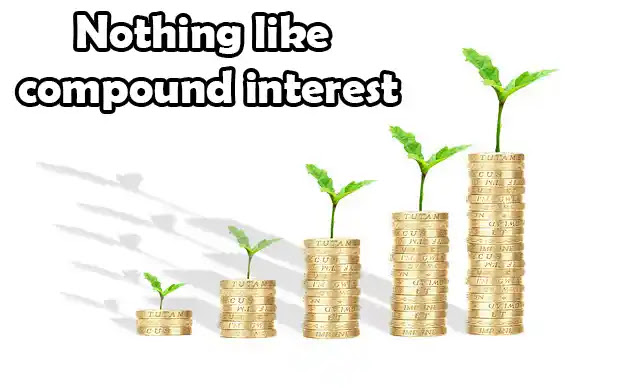
5. Nothing like compound interest


This is an excellent element of money. Compound interest can increase the value of your money to double or even triple. When you receive interest on interest, your money begins to work for you. It's a terrific invention and one of the best ways to make money.


An example of compound interest:

$100 invested @ 5% = $105
$105 re-invested @ 5% = $110.25
$110.25 re-invested @ 5% = $115.76

Again, do your research, and find the best interest rates.

Nothing magical about money

It's a horrible reality, yet many of us would rather walk than a crawl. I'm not sure who said that, but "a penny saved today is worth two tomorrows," and it's true. The first step in reaching your financial goals is to set a goal and work toward it. There are various financial tools available to assist you in meeting your financial goals. This article discussed five basic strategies...


·Set a realistic budget
·Stay away from debt
·Invest in something regularly
·Keep funds for emergencies
·Nothing works like compound interest

Follow these five secrets and you will reach your money goals.....


Managing Director of 
 Blind Set 
 [Editor & presenter]
 Subair Mohammed Osmi

Self Help To Motivation - Boost Your Own Morale

Self Help To Motivation - Boost Your Own Morale

Human behavior is always astonishing. We know what we need to do to succeed in life, but we seldom do it. There are various reasons why we are not meeting our objectives. Many times, even though we are intellectually correct, we choose to dismiss it for emotional reasons. We are motivated by our emotions every day, every minute. Assume you're resting in bed and your reasoning tells you that exercising is beneficial to your health. You think to yourself, "Do you want to do it right now? Should I begin tomorrow? "and you are aware that the sensation that creeps in will shape your life. This seemingly minor distinction may have a significant impact on the quality of your life.

Self Help To Motivation - Boost Your Own Morale

To begin, you must first choose your GOALS. It is quite difficult to reach your objectives if you do not set them. And, even if you've set your goals and planned a strategy, what use is it if you're not motivated? You won't even try to take the first step. It's like owning the best car in the world, with all of the parts working well; the car can go swiftly while consuming the least amount of fuel. The car does not move if there is no driver or if the driver does not ignite and start the vehicle. Motivation is like to a spark plug in an engine. This is the fuel that powers the human engine. You can have the best characteristics or abilities in the world, but if you lack drive, you won't get very far. Motivation is the impetus that drives you to accomplish what you do.

“How soon ‘not now’ becomes ‘never’” –  Martin Luther King

Self Help To Motivation - Boost Your Own Morale

Motivation is defined as the desire to achieve a goal. Motivation, in conjunction with passion and energy, pulls us forward in life. Motivation may come in two kinds.


01.Motivation from Outside Sources: You get driven and moved when you witness something happening. You succeed in some of your actions, and as you see the results, you get more excited and determined to succeed. Yes, this must always happen for you, but when you want to do great things, there is a chance you may fail, and it is at that point that you will need the strongest determination to overcome the failure and achieve more in life. While this works, you shouldn't expect to enjoy it every time, and you shouldn't rely on it for inspiration.

02. Internal motivation: This is the most powerful sort of motivation. We have all of the resources we need at all times; we simply need to access the right ones. Motivation is driven by a strong interest or desire. When you live with passion, you don't need anything else to motivate you. You are just motivated to achieve your goals in life. Mental pictures that we entertain in our brains are mostly responsible for motivation. I am convinced that you would have felt the inspiration inside you if I asked you to shut your eyes and recall a time when you were motivated and feel the same way you did at the time, increasing the experience. As previously said, these workouts require you to give your all. Setting objectives for oneself should immediately motivate you. It should inspire a sense of motivation in you, allowing you to achieve more in life.

Self Help To Motivation - Boost Your Own Morale

Motivation may push a person to success, and it is necessary to have an inner motivation to approach life constructively. Because each person is unique, self-help to motivation varies depending on priorities, as what motivates one person may not inspire another. Motivation is tough to develop since it is difficult to recognize it in yourself and the requirements you have in life. Putting facts first and taking charge of the problem, on the other hand, is the greatest method to boost motivation.

Maintaining a positive feeling of self-worth and identifying personal motivators by asking them to work for you are key. Believing in yourself and your abilities without imposing artificial limitations and so maximizing your potential is the proper method to self-help and drive. A motivated person's determination should be stronger, and therefore becoming detoured due to discouragement or minor roadblocks should be less likely.

Self-help motivation creates a pleasant feeling and raises self-esteem. These are some of the core components that every person contains, and the key thing is to take the time to search within and unlock your potential. Motivation is vital for achieving personal and professional success in life. This is accomplished through becoming conscious of one's desires in life, such as what and how one desires things in life, which leads to motivation. Similarly, being around positive people who actually care and love you is essential for success. An negative environment is certain to have an effect on performance and weaken the grip on motivation.

Self Help To Motivation - Boost Your Own Morale

Setting goals makes people more hopeful and motivated to work towards them, and when people achieve their goals, they are inspired to work even more. Self-help and motivation are founded on self-belief, and low self-esteem has a negative influence on one's life. Taking the initiative and tackling it with zeal is only possible if one is eager to accept self-help. To stay motivated, read inspirational stories that will help you grow in leaps and bonds.

Setting goals makes people more hopeful and motivated to succeed. There are times when people feel out of control, depressed, and their motivating spirit seems to be evaporating. This is the time to recall how to react correctly and forcefully, which will lead to the correct path to motivation. Identify the good ideas, ask yourself the questions, and start answering them, and you will see that this is a legitimate way of self-help and motivation, even in terrible situations. When you discover a glimmer of hope, start digging under the surface to find the source of your issue and confront it bravely with safety and self-respect.

Motivation is facing any hurdle and taking action, no matter how small, to keep your head high and continue on the planned path. Such determination will never fail you, and your attitude is everything. It is tough to stay motivated, but with self-help aid, motivation should be strong.


Managing Director of 
 Blind Set 
 [Editor & presenter]
 Subair Mohammed Osmi